
Easy Vegan Buttermilk | 2 Ingredients & High Protein
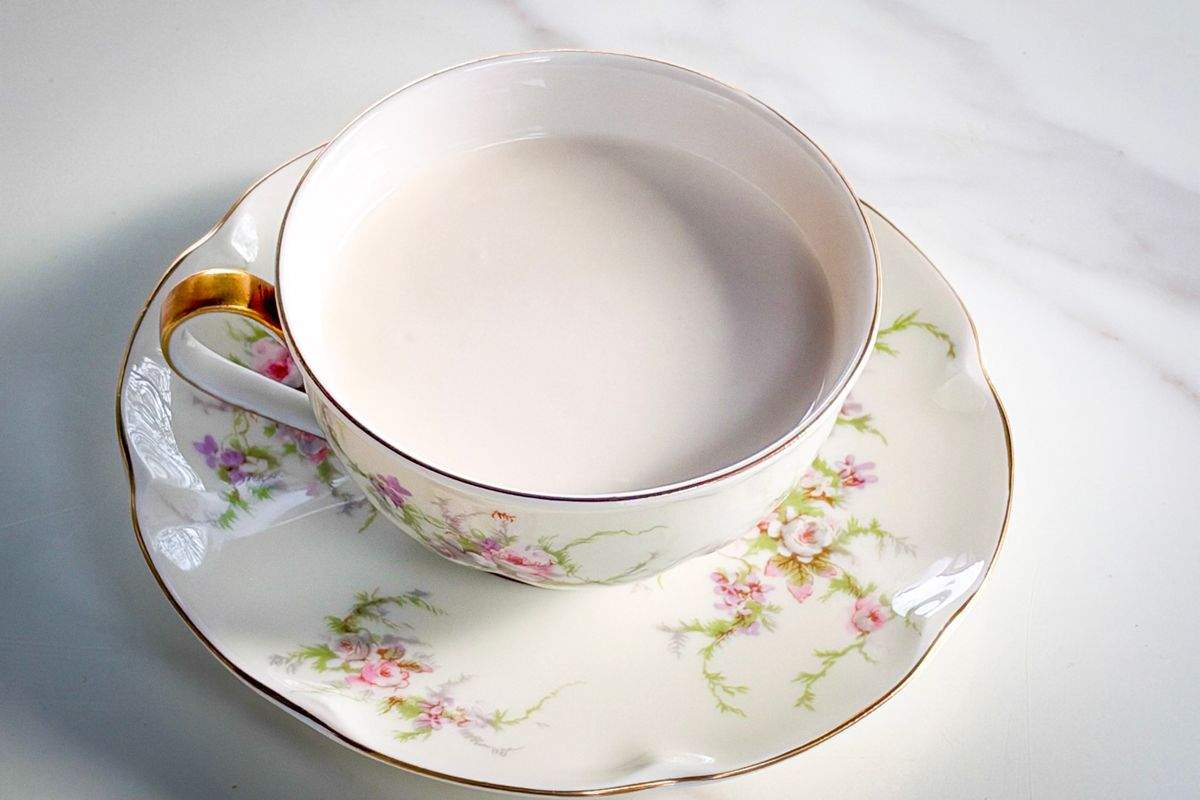
Intro
There are so many recipes out there that call for buttermilk, from pancakes and biscuits to the batter for vegan fried “chicken” or fried tofu. Traditionally, buttermilk is the sour liquid left over after churning cultured butter. Today, most store-bought buttermilk is cultured milk, and some brands add stabilizers like carrageenan or starches to mimic that thick texture. All of it is very dairy-heavy, and very much not vegan.
The good news is you can make a fantastic vegan buttermilk at home in minutes with just two simple household ingredients. It gives you the fluffiest baked goods and ultra-crispy fried foods, just like you’d expect from traditional buttermilk, without all the cholesterol.
It’s one of those little recipes that ends up in everything. We reach for it for fluffy weekend pancakes, flaky holiday biscuits, tender cornbread, and the batter for crispy fried “chicken,” and it also works as a substitute in our Scalloped Potatoes. Once you know how easy it is, you’ll never think about buying a carton of buttermilk again.
Now let’s get into the nutrition, because that’s really important to us.
Nutrition
This recipe makes 1 cup of vegan buttermilk and has absolutely no cholesterol, unlike store-bought non-vegan buttermilk. The exact nutrition varies a lot depending on which soy milk you use. We like EdenSoy and Westlife Smoothie Blend because they’re both very high in protein. With those, one cup has 114 calories, 11.3g of protein, 4.5g of carbs, and 5.7g of fat.
Your numbers will shift with the brand you choose, but soy milk usually has at least 8g of protein per cup, which is comparable to dairy buttermilk (and higher if you use the ones we recommend). Our version has a slightly higher fat content than reduced-fat dairy buttermilk, but almost 3g less saturated fat, and it’s high in omega-3 and omega-6 fats, so the fat it does have is the healthy kind. It’s also higher in iron, magnesium, folate, zinc, vitamin K, and so much more.
Now let’s talk about the ingredients, which couldn’t be simpler:
What You’ll Need
- Plain, unsweetened soy milk: the base of the recipe. Because soy milk is high in protein, it reacts well to acid, thickening and curdling into a buttermilk-like texture.
- A liquid culinary acid: lemon juice, apple cider vinegar, or similar. This is what sours and thickens the soy milk.
That’s it. Two ingredients, no special equipment.
Tips for Success
- Use plain, unsweetened soy milk unless you’re fine with your buttermilk tasting sweet or like whatever flavoring is in the soy milk.
- Use room temperature soy milk. Cold soy milk won’t curdle and thicken the way room temperature soy milk does. If yours is cold, heat it in the microwave in short bursts until it’s at room temperature.
- Let the mixture sit undisturbed for at least 5 minutes, preferably closer to 10. Do not stir it during this time, because the protein network is fragile. Even after it has set, try not to over-mix it.
How to Store
Store any leftover buttermilk in an airtight container in the refrigerator for up to 3 days. We don’t recommend freezing it. It’s so easy to make that there’s no point, and freezing ruins the texture.
Frequently Asked Questions
Can I use a different plant milk other than soy?
Yes, you can use pretty much any plant milk. Our favorites are pea milk, full-fat or barista-style oat milk, and almond milk. Keep in mind that the lower the protein content of the plant milk, the thinner the buttermilk will be. If you plan to use it in something like a fried food batter, we recommend sticking with a high-protein plant milk (above 8g of protein per cup).
What can I use instead of lemon juice?
You can use a 1:1 ratio of pretty much any liquid culinary acid, like lime juice, apple cider vinegar, or white vinegar. You can also use ½ teaspoon of food-grade lactic acid powder.
Why isn’t my buttermilk thickening?
There are a few possible reasons. You may not have let the mixture sit long enough before stirring, you may have used cold plant milk instead of room temperature, or your plant milk may simply be too low in protein to thicken as much as a high-protein one like soy or pea. See the notes section for more information. If you’re still having trouble, leave a comment and we’ll help you debug it.
Ready to give it a try? Here’s the full recipe:
Easy Vegan Buttermilk | 2 Ingredients & High Protein
Make vegan buttermilk with just two ingredients. High in protein with no cholesterol, it’s perfect for fluffy pancakes, biscuits and crispy fried batters.
- Prep
- 10 min
- Cook
- 0 min
- Cool
- 0 min
- Total
- 10 min
- Servings
- 1 (1 cup each)
- Difficulty
- Easy
Ingredients
Instructions
In a small bowl add 3/4 cup + 3 tbsp Plain Soy Milk (at room temperature) then pour in 1 tbsp Lemon Juice and let sit undisturbed for 5-10 minutes. It's very important your milk is room temperature and that you don't stir the mixture for at least 5 minutes!
Stir the mixture gently, if it isn't thick and curdled let it sit for an additional 5 minutes, otherwise use in any recipe that calls for buttermilk. If your buttermilk still isn't thickening after additional time see the notes section.
Nutrition (per serving)
- Calories
- 114 kcal
- Protein
- 11.3 g
- Carbs
- 4.5 g
- Fat
- 5.7 g
- Fiber
- 0.3 g
- Sugar
- 0.4 g
- Sodium
- 9.5 mg
Notes & Tips
- Our favorite type of plant milk to use in this recipe is soy because it's neutral in flavor, high in protein and really makes the best vegan buttermilk. If you don't have soy on hand these are our next favorites (in order):
- Pea Milk: high in protein and thickens like soy milk but has a mild pea flavor.
- Full-fat/Barista Oat Milk: results in a slightly thinner buttermilk but it will still work.
- Almond Milk: results in quite a bit thinner buttermilk but it will work in baked goods, we don't recommend for in fried food batters though.
- If you don't have lemon juice on hand you can use a 1:1 ratio of any liquid culinary acid, our favorites being apple cider vinegar and distilled white vinegar. Any sour citrus like lime juice or vinegar will also work they'll just impart more of the flavor of the liquid acid on your buttermilk.
- Make sure you plant milk is room temperature! It's much harder for plant milk to react to the acid and actually thicken when it's cold, so using room temperature milk is super important in this recipe. If you ignore this, don't get upset at us when your buttermilk doesn't thicken!
- If your buttermilk isn't thickening these are most likely the culprits:
- Your soy milk was too cold. Let the mixture come up to room temperature then stir in a tiny bit more lemon juice and let sit for 5-10 minutes. If that doesn't fix the issue, start over with room temperature soy milk.
- If not using soy milk, then it's possible your plant milk isn't high enough in protein to thicken like it should, we like using plant milks with 8g of protein or more per cup for the best results. Look at the first bullet in the notes section for our favorite soy milk substitutions.
- You didn't let the mixture sit undisturbed long enough. Let the mixture rest for additional time and if it still doesn't curdle/thicken then you probably mixed it too much and need to start over.
You may also like
Dairy Substitutes
The Best Vegan Parmesan Cheese Recipe — Firm, Shreddable, No Cashews, No Agar Agar
30 min
Dairy Substitutes
Easy Homemade Vegan Mozzarella (No Agar Agar — Melts, Stretches & Shreds)
12 hr 30 min
Dairy Substitutes
Best Vegan Cheddar Cheese Recipe (Shreddable, Meltable & 50% Cheaper Than Store-Bought)
12 hr 30 min
Reviews
No reviews yet. Be the first to share your experience!